
This site uses cookies to store information on your computer. Some are essential to make our site work properly; others help us improve the user experience. We value your privacy and encourage you to read Kapitus’s Privacy Policy to learn more about how we use cookies and how we may collect and use visitor data. By continuing to use this site, you consent to the placement of these cookies. If you wish to limit this tracking, please select your preferences below or broadcast a Global Privacy Control (GPC) signal.


  • Link to LinkedIn
  • Link to X
  • Link to Youtube
  • Link to Instagram
  • Link to Facebook
Call now: (800) 780-7133Login
Kapitus
  • Solutions
  • Products
    • Business Loans
    • Line of Credit
    • Revenue Based Financing
    • Equipment Financing
    • Purchase Order Financing
    • SBA Loans
    • Invoice Factoring
  • Partnerships
  • Resource Center
  • About
  • Contact
  • Login
  • APPLY NOW
  • Click to open the search input field Click to open the search input field Search
  • Menu Menu

Articles about leasing equipment for your business.

Tag Archive for: equipment leasing

Rent, Lease or Buy Business Equipment: How to Choose

Manage Your Money
by Brandon Wyson15 minutes / October 15, 2026
  • Share on Facebook
  • Share on X
  • Share on LinkedIn
  • Share on Tumblr
  • Share on Vk
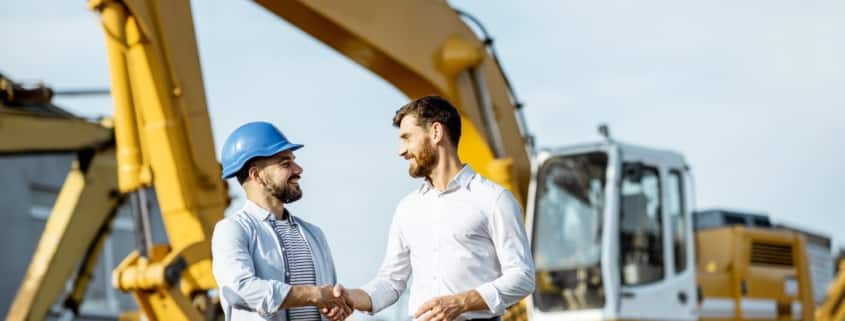
Handshake in front of crane

Almost every business eventually needs a piece of equipment it can’t afford to get wrong. It might be a delivery truck, a new server, a commercial oven or anything that keeps your business running. Navigating the choice to rent vs. lease vs. buy business equipment isn’t always simple.

The right answer depends on your cash position, how often you’ll use the equipment, how fast it becomes outdated and what your tax picture looks like this year. Getting it wrong can tie up cash you need elsewhere or leave you without a critical machine at the worst possible moment.

Key Takeaways

  • Match the option to how you’ll use the equipment: Buy when you’ll use it often and it holds its value. Lease when the technology changes quickly or you need it for a defined number of years. Rent when your need is short-term, seasonal or uncertain.
  • Tax rules currently favor buying: For 2026, the Section 179 deduction limit is $2,560,000, and 100% bonus depreciation is permanent. This can let many businesses deduct much of a qualifying equipment purchase in the first year.
  • Compare total cost, not monthly payments: Maintenance, insurance, downtime, storage and resale value all belong in the calculations. Equipment financing gives you a way to own without paying everything upfront.

How Do You Decide Whether to Rent Vs. Lease Vs. Buy Equipment?

The decision comes down to a handful of questions. How often will you use the equipment? How long will it stay useful? How much cash can you commit without putting day-to-day operations at risk? And how much do you value flexibility compared with ownership?

Before you compare prices, it helps to understand what each option actually means:

OptionTypical TermOwnershipUpfront Cost
RentDays to monthsNoneLowest
LeaseOne to seven yearsUsually none (some leases end with a buyout option)Low to moderate
Buy (cash or financing)Life of equipmentFullHighest (cash) or moderate (financed)

There’s no universally correct choice. A business with steady, year-round demand and a long-lasting asset leans toward buying. A business with seasonal swings or fast-changing technology leans toward renting or leasing. Most businesses end up using a mix of all three across different pieces of equipment.

When Does It Make Sense to Buy Equipment?

What Are the Benefits of Buying Equipment?

Buying equipment, whether with cash on hand or through equipment financing, gives you true ownership. That matters most when you use a machine heavily and consistently, because the more you use it, the more the cost per hour drops. Owned equipment can also be a long-term asset: you build equity as you pay it off, you can customize it and you can sell it or trade it in when you’re done.

Consider a small manufacturer that runs a specialized machine every day to fill steady orders. Over several years, the cost of ownership spreads across thousands of hours of production, and the machine can end up costing far less than renting or leasing the same capacity. The same logic applies to a restaurant that runs its ovens and refrigeration all day or a trucking company whose vehicles are on the road constantly.

Tax treatment has also become a bigger factor in favor of buying. Under current law, the IRS Section 179 limit for 2026 is $2,560,000, with the phase-out starting at $4,090,000 of qualifying property placed in service. In addition, the One Big Beautiful Bill Act reinstated 100% bonus depreciation for qualifying assets acquired after January 19, 2025, and that rate no longer phases down on a schedule. In practical terms, many small businesses can deduct the full cost of qualifying equipment in the year they put it into service, rather than spreading the deduction over many years. Eligibility depends on the asset, how you use it and your taxable income, so talk to a tax professional before you count on a specific deduction.

What Are the Downsides of Buying Equipment?

Ownership comes with costs that don’t show up on the sticker price:

  • Tied-up capital: Cash spent on equipment isn’t available for payroll, inventory or opportunities.
  • Maintenance and repairs: You’re responsible for upkeep, and specialized machines can be costly to fix, especially if you don’t have technicians on staff.
  • Obsolescence: Technology moves quickly. Equipment that’s cutting-edge today may be outdated in a few years.
  • Underuse: A machine that sits idle is a fixed cost with no return.
  • Risk concentration: If a slow season, a lost customer or a labor shortage cuts into your revenue, you still owe on the equipment.

Imagine a business that buys a high-cost machine expecting a steady stream of orders, and then a major client leaves. The payments, insurance and maintenance keep coming whether the machine is running or not. With a rental, the financial hit from a down year may be smaller because you can stop renting when you no longer need the equipment.

Is Buying a Bet on the Future?

In many ways, yes. Buying large equipment works best when you have solid industry knowledge and an exit strategy, such as a resale market, a trade-in program or a plan to keep it running for its full useful life. First-time owners and businesses entering a new industry should be especially cautious about committing a large share of their total capital to a single asset. Small businesses often have the most to gain from owning equipment, but only if it earns a meaningful return.

When Does It Make Sense to Rent Equipment?

What Are the Benefits of Renting Equipment?

Equipment rental requires the least capital upfront and the shortest commitment. It’s often the most practical option for new businesses still finding their footing, for one-off projects and for seasonal operations with predictable peak periods. If you need a specialized machine for three weeks a year, paying for it year-round makes little sense.

Renting also moves maintenance and storage off your plate in many cases, and online rental marketplaces and dealer networks have made it easier to compare prices and book equipment quickly than even just few years ago. Industries such as construction, event services and landscaping depend on rentals to stay profitable.

Picture a contractor who takes on a large project that requires heavy machinery for six weeks. Buying the equipment would tie up capital for a one-time need, while renting it lets the contractor bill the cost to the job and move on. Over time, the goal is to build enough savings or study demand closely enough that buying becomes an obvious decision rather than a stretch.

What Are the Downsides of Renting Equipment?

The core drawback is that you don’t control the equipment. That creates several risks:

  • Availability: When many businesses in your area need the same equipment at the same time (think peak construction season or a post-storm rebuild), there may not be enough to go around. A missed rental can delay a project or cost you a contract.
  • Damage liability: If the equipment is damaged while it’s in your hands, you may owe repair costs on top of the rental rate.
  • Cost over time: Rental rates are higher per day than the equivalent cost of owning or leasing, so heavy use can get expensive fast.
  • Unfamiliar or worn equipment: You may not get the same machine twice, and condition can vary.

How Can You Rent Equipment More Efficiently?

Renting works best with a specific plan of how and when you’re going to use the machinery. Reserve early for peak seasons, work with reputable providers, read the damage and insurance terms before you sign and keep a backup plan (a second provider or a cash cushion) in case your first choice falls through. For seasonal businesses with thin margins, one failed rental can be the difference between a good year and a closed business.

When Does It Make Sense to Lease Equipment?

What Are the Benefits of Leasing Equipment?

Equipment leasing is the middle path. You get to use the equipment for a set term, usually with lower upfront costs and predictable monthly payments, without the long-term commitment of ownership. Leasing is especially useful when equipment needs to be changed out often or loses value fast, since you’re not stuck with outdated technology. At the end of the term, you can typically return the equipment, upgrade to a newer model or (depending on the lease) buy it.

Leasing is common across industries:

  • Offices lease copiers and printers
  • Schools lease student laptops and tablets
  • Medical and dental practices lease diagnostic and imaging equipment
  • Trucking and delivery companies lease vehicles and trailers
  • Restaurants lease ovens, dishwashers and point-of-sale systems

What Are the Different Types of Equipment Leases?

Not all leases work the same way, and the type you choose affects both cost and tax treatment:

  • Operating lease:A lease focused on using equipment rather than buying it, usually for equipment you plan to return. Payments are generally treated like an operating expense.
  • Fair market value (FMV) lease:The most popular type of operating lease. It features lower monthly payments and gives you the option to return the gear or buy it at its actual market value when the term ends.
  • Finance lease (or capital lease):Structured more like a purchase. You make payments over the term and typically have the option to buy the equipment at the end for a set price, sometimes as little as $1.

Lease accounting has also changed. Under current accounting standards (ASC 842), most leases longer than 12 months must now appear on a company’s balance sheet as both an asset and a liability. That shift mostly affects how lenders and accountants view your obligations, but it’s worth discussing with your accountant if you plan to apply for other financing.

What Are the Downsides of Leasing Equipment?

Leasing usually costs more than buying over the full life of a long-lasting asset, and you don’t build equity. Many leases include usage limits, wear-and-tear charges or early termination penalties, and you may be locked into payments even if you stop needing the equipment. Read the fine print, especially around end-of-term options.

Rent vs. Lease vs. Buy Business Equipment: How Do They Compare?

When weighing whether to rent vs. lease vs. buy business equipment, a side-by-side look at the tradeoffs can help you pinpoint the right financial fit:

FactorRentLeaseBuy
Upfront costLowestLow to moderateMost (less if financed)
Monthly costHighest per useModerate but predecidedModerate (if financed)
FlexibilityHighestModerateLowest
MaintenanceOften the provider’s responsibilityVaries by leaseYours
Builds equityNoUsually noYes
Best forShort-term or seasonal needsDefined multi-year needsLong-term, high-use assets

What’s the Real Difference Between Renting and Leasing?

Renting and leasing both let you use equipment without owning it, so they’re easy to confuse. The difference comes down to commitment, cost structure and control.

Commitment

Renting is short and flexible. You pay for the time you need the equipment, whether that’s a few days or a few months, and then return it. Leasing is a contract for a set term, often one to seven years, and you’re generally responsible for the payments for the full length of that term, even if your needs change.

Cost structure

Rentals carry a higher price for each day or month of use, but you only pay while you need the equipment. Leases carry a lower, predictable monthly payment, but you pay it whether the equipment is busy or sitting idle. In general, the more consistently you need a piece of equipment, the more a lease makes sense. The more occasional the need, the more a rental does.

Responsibility

Rental providers often handle maintenance and repairs, though you’re usually liable for damage. With a lease, maintenance responsibility depends on the contract, and many leases leave routine upkeep and insurance up to you.

End of the arrangement

A rental simply ends when you return the equipment. A lease ends with a decision: return it, renew, upgrade to a newer model or (depending on the lease type) buy it.

Here’s how the two compare at a glance:

FactorRentLease
CommitmentShort-term, flexibleFixed term, binding contract
Cost patternHigher per use, pay only when neededLower, steady payments regardless of use
MaintenanceOften the provider’s responsibilityVaries by contract
When it ends…Return it and walk awayReturn, renew, upgrade or buy
Best forShort projects, seasonal peaks, uncertain demandsOngoing needs over several years

A good way to think about it: rent when you’re buying time, and lease when you’re buying access. If you can’t say with confidence how long you’ll need the equipment or how often you’ll use it, renting keeps your options open. If you know you’ll need it consistently for the next few years and want predictable costs, leasing is likely the better fit.

What Questions Should You Ask Before You Decide?

Before you commit to any option, work through these:

  • How many hours or months a year will we really use it? Be honest, and use past data rather than optimism.
  • How quickly does this type of equipment become outdated?
  • What does it cost to maintain, insure, store and operate?
  • What’s the resale or trade-in value?
  • Can we afford the upfront cost without hurting working capital?
  • What happens if our revenue drops next year?
  • How long will delivery take? Supply chain delays can stretch lead times on new equipment, and a rental or lease from existing inventory may get you running sooner.
  • How will the tax treatment affect our bottom line?

Can Equipment Financing Change the Equation?

Yes. Equipment financing lets you buy equipment while spreading the cost over time, with the equipment itself typically serving as collateral. That can preserve your cash while still delivering ownership and (depending on your situation) potential tax benefits.

For businesses that would normally rent because they can’t afford to buy, financing can open a path to ownership that makes more sense in the long run. For businesses that lean toward leasing, it’s worth comparing the total cost of both so you’re not choosing based on monthly payment alone.

Weighing Your Options, Not Just Your Budget

There’s no universal answer saying buying, leasing or renting is best. But you can make a well-informed decision by looking at how often you’ll use the equipment, how long it will stay useful, what the true total cost looks like and how each choice affects your cash flow and taxes.

Businesses that plan with a safety net and a backup option have the least to lose when a major purchase doesn’t go as expected. When in doubt, run the numbers on all three options and talk with your accountant or a financing specialist before you sign.

FAQs

Is it better to rent, lease or buy business equipment?

When considering whether to rent vs. lease vs. buy business equipment, the best path depends on how often you’ll use it, how long it will stay useful and how much cash you can comfortably commit. Buyinggenerally suits long-term, high-use equipment. Leasing fits equipment that changes quickly or is needed for a defined period. Renting works best for short-term or seasonal needs.

What’s the difference between renting and leasing equipment?

Renting is typically a short-term arrangement, from a few days to a few months, with no long-term commitment. Leasing is a longer contract, usually one to seven years, with fixed monthly payments and sometimes an option to buy at the end.

What are the tax benefits of buying equipment in 2026?

For the 2026 tax year, the Section 179 deduction limit is $2,560,000, and bonus depreciation is available at 100% on a permanent basis. These rules can let businesses deduct much or all of the cost of qualifying equipment in the first year. Eligibility depends on the type of asset, how it’s used and your taxable income, so consult a tax professional.

Can I deduct equipment lease payments?

Generally, yes. Equipment lease payments are usually deductible as a business expense. If the agreement is treated as a purchase for federal tax purposes, you may qualify for Section 179 or depreciation deductions instead. Tax treatment depends on the agreement’s terms, not simply whether it’s called an operating or finance lease, so check with your accountant.

Is leasing equipment cheaper than buying?

Leasing usually costs less upfront and in monthly payments, but buying is often cheaper over the full life of a long-lasting asset because you own it at the end. Leasing tends to win when the equipment would become obsolete or lose value quickly.

What are the risks of renting equipment?

The main risks are availability during peak demand, liability for damage, higher per-use costs and variable equipment condition. You can reduce these risks by reserving early, using reputable providers and having a backup plan.

What happens at the end of an equipment lease?

It depends on the lease type. You may return the equipment, renew the lease, upgrade to a newer model or buy the equipment, either for a preset price or at fair market value.

Can I finance equipment instead of leasing or renting it?

Yes. Equipment financing lets you purchase equipment and pay for it over time, often using the equipment as collateral. That preserves cash while still giving you ownership.

How do I know if I can afford to buy equipment?

Look at your cash reserves, your monthly cash flow and how the payments (or the lost working capital) would affect your operations in a slow month. If buying would leave you short of cash for payroll or inventory, leasing, renting or financing may be safer.

Brandon Wyson

Brandon Wyson

Content Writer
  • Twitter
  • LinkedIn
  • Facebook
  • Youtube
  • Instagram

Expertise: Expertise: Business communication, small business operations, international trade and importing. 

Years of experience: 9

Brandon is a business writer and former small business owner. Before becoming a full-time writer with Kapitus in 2021, he worked as a local journalist for publications in New York City and Boston.

After building a successful importing business supported with strategic financing, Brandon now uses that firsthand experience to help other small business owners make smarter funding decisions.

Today, he writes practical articles about the day-to-day of running a business, loans and financing strategy. His goal is to break down complex financial topics into clear, actionable guidance so business owners can choose the right financing and keep their businesses moving forward with confidence.

Read More Articles >>

Related Posts

Our trending spaces

October 15, 2026 Financing
Manage Your Money

Rent, Lease or Buy Business Equipment: How to Choose

October 15, 2026/by Brandon Wyson
October 6, 2026 Financing
Manage Your Money

Traditional Bank Vs. Alternative Lender: Which Is Better for Your Small Business

October 6, 2026/by Vince Calio
October 6, 2026 Financing
Manage Your Money

Small Business Loan Application Checklist

October 6, 2026/by Vince Calio
Load more
https://kapitus.com/wp-content/uploads/iStock-1174262654.jpg 1468 2200 Brandon Wyson https://kapitus.com/wp-content/uploads/2024/01/Kapitus_Logo_white-220.webp Brandon Wyson2026-10-15 11:40:552026-10-15 11:37:49Rent, Lease or Buy Business Equipment: How to Choose

What Is Heavy Equipment Financing?

Industry Challenges
by Simon Dreyfuss7 minutes / January 9, 2022
  • Share on Facebook
  • Share on X
  • Share on LinkedIn
  • Share on Tumblr
  • Share on Vk
heavy equipment financing

KEY TAKEAWAYS

  • Whether you’re in construction, agriculture, or another industry that requires large equipment to operate, heavy equipment financing can provide a valuable tool to procure essential machinery without depleting your working capital.
  • Heavy equipment financing, like all financing, has both pros and cons. While it can offer tax benefits and flexible payment terms, it’s crucial to consider potential downsides such as lengthy repayment schedules which can impact future borrowing.
  • Applying for heavy equipment financing is streamlined and straightforward process which typically requires minimal documentation.

Technology is ever-changing and the equipment you’re using can quickly become obsolete. When this happens, your business may have to invest in new heavy equipment to keep itself going and remain competitive. However, large equipment purchases can put a dent in your cash flow, which could impact your operations.

Heavy equipment financing gives you the resources you need to purchase or lease much-needed heavy equipment without dipping into your cash reserves. But what exactly is heavy equipment financing? In this article, we’ll discuss its definition, the pros and cons of utilizing it, and the requirements for approval.

What Is Heavy Equipment Financing?

Heavy equipment financing is a business loan designed specifically for purchasing heavy-duty mowers, backhoes, bulldozers, and other heavy equipment. The loan is prevalent in manufacturing, agriculture, transportation, and even the food industry.

Lenders give you the working capital needed to secure the necessary equipment. You can get up to 100% financing to cover the cost of the equipment depending on several factors, like your credit rating, type of equipment, and the industry you’re in.

Pros of Heavy Equipment Financing

Securing financing for your new heavy equipment provides you with several benefits you won’t enjoy from other options.
One is that a business owner has the potential to claim a full deduction on the amount of the purchase from yearly income tax. Under Section 179 of the Internal Revenue Code, businesses that purchase new machinery this year may be able to claim tax deductions of up to $1.05 million. One of the key requirements, however, is that the equipment must be used in business operations in the tax year for which you’re claiming deductions in order to take advantage of this deduction.

Leasing offers a similar benefit, but you can only deduct the amount you’re paying every month from the lease. The deduction would be equal to the monthly amortization multiplied by 12 months. Leasing does guarantee yearly tax savings throughout the contract, but heavy equipment financing offers a higher lump-sum compensation immediately after purchasing the gear, aside from the annual deductions from the fees and interest incurred.

Another benefit of heavy equipment financing is flexibility. Armed with your financial statements, you have the opportunity to negotiate more comfortable terms. This means you can avoid breaking the bank and maintain good financial standing. You can also exert a degree of control over your cash flow and expenditures.

In all cases, financing is a method that helps businesses like yours build good credit records. You just need to make sure your lender reports your standing to business credit bureaus. It could be a pathway through which you get access to more business credit.

Cons of Heavy Equipment Financing

Like all available options for acquiring heavy equipment, financing also has its own set of disadvantages.
One disadvantage is that the significant amount of the loan and the extended terms can tie your finances down until it matures. It might be difficult for you to secure another loan when you need it, as some lenders are wary about granting loans when borrowers appear to be deep in debt already. This is beyond your control since lenders base decisions on your financial statements.

In addition, the ongoing loan could affect your financial health. Loan payments are accounted for as liabilities, so there’s a risk of your debt-to-asset ratio getting higher. In the eyes of creditors, a high ratio means that a borrower carries a high risk of not paying back a loan. As stated above, they may decline your application or, at the very least, attach high-interest rates to the money they will lend.

While this doesn’t happen often, another drawback is that the lender might require you to secure the loan using existing assets. Some creditors do not require any collateral, preferring instead to secure the loan with the equipment being purchased.

Unless expressly stated during the application process and in your contract, you can rest assured that your business and personal assets are safe even if you default on your obligation in heavy equipment financing.
Last but not least, an overly long repayment period could result in depreciation. In other words, your heavy equipment might become obsolete after it is fully paid off. Of course, this can be avoided by negotiating shorter yet still affordable repayment terms.

How to Apply for a Heavy Equipment Financing

The application process for heavy equipment financing is fast and straightforward. Many lenders, like Kapitus, offer an easy-to-use equipment financing application that should only take about five minutes to complete and requires minimal documentation.

One of the documents required is the vendor invoice. The invoice proves the value of the heavy equipment you’re looking to borrow money for. The lender needs this to know how much you need from them. Your vendor will send this invoice to you as part of your purchase agreement. You don’t have to pay for the invoice right away, which gives you more time to seek financing.

You also need to prepare your financial statements, which include documentation from your bank. It’s highly recommended to have at least six months’ worth of statements on hand when you are applying.
Once you’ve gathered all your documents, you just need to go to the issuer’s website and complete an application. The application covers information about your business, the type of equipment you’re looking to purchase, and some personal information.

Complete the application, attach the needed documents, and you’ve applied!. Make sure to free up some time because a consultant will call you to learn more about your business. After receiving confirmation of approval, you’ll also receive another call to discuss your payment terms just before the lender pays for the vendor invoice.
The payment and final delivery of the equipment then conclude the process. As mentioned earlier, all that’s left to do is to keep your end of the bargain by making payments as agreed upon.

Maximizing the Benefits of Heavy Equipment Financing

As a bonus, here are some tips that could help you maximize the benefits of a heavy equipment loan.
Many businesses choose to purchase new equipment as it’s less likely to break down from frequent use and is covered by warranty for the first few years. In other words, you can avoid expensive maintenance or repair fees that could affect your cash flow.

If you find yourself preferring used equipment, you should enlist a professional mechanic to inspect the equipment before you request an invoice. If there are defects, secure the seller’s commitment to fixing them before moving forward with a purchase. Again, the goal is to avoid spending money on repair and maintenance as much as possible.
Lastly, don’t be afraid to negotiate. There’s a reason why there are a couple of calls before you’re approved for your heavy equipment loan. This gives you time to understand your contract’s terms and allows you to discuss and negotiate those terms.

Your equipment is an integral and essential part of your business. You should not hesitate to invest in new equipment if the old ones in your inventory are way past their useful lives. Many creditors are ready to help you with this significant investment through heavy equipment financing.

Simon Dreyfuss

Simon Dreyfuss

  • Twitter
  • LinkedIn
  • Facebook
  • Youtube
  • Instagram

Read More Articles >>

Related Posts

Our trending spaces

September 30, 2024 Industry Challenges
Restaurants

Complete Guide to Restaurant Loans

September 30, 2024/by Vince Calio
February 6, 2023 Industry Challenges
Trucking

Why a Line of Credit Makes Sense for the Trucking Industry

February 6, 2023/by Brandon Wyson
February 6, 2023 Construction
Industry Challenges

How Does a Business Line of Credit Fit for Contractors?

February 6, 2023/by Vince Calio
Load more
https://kapitus.com/wp-content/uploads/Excavator-med.jpg 1530 2200 Simon Dreyfuss https://kapitus.com/wp-content/uploads/2024/01/Kapitus_Logo_white-220.webp Simon Dreyfuss2022-01-09 14:37:512023-10-20 12:11:56What Is Heavy Equipment Financing?

The Ins and Outs of Equipment Leasing

Manage Your Money
by Brandon Wyson11 minutes / January 28, 2020
  • Share on Facebook
  • Share on X
  • Share on LinkedIn
  • Share on Tumblr
  • Share on Vk
The ins and outs of equipment financing

Suppose you need expensive equipment to run or grow your business. If you pay cash for it, your employees’ paychecks would bounce. Equipment leasing might be the rescuing you need.

What is Equipment Leasing?

Equipment leasing is a payment strategy accounting for around one-third of all equipment in use, from desktop computers to jumbo jets. “Evidence suggests,” according to the Commerce Finance Institute (CFI), “that an origin of leasing may have started… in the ancient Sumerian civilization.” Leasing has since evolved into an accessible financial resource.

The CFI defines an equipment lease as “a contract for the use of a piece of equipment over a specified period of time where the user of the equipment becomes the lessee and agrees to make periodic payments to the lessor of the equipment with specific end of term options.” In other words: you’re renting the equipment. Unlike renting a home, for example, the opportunity to buy the equipment outright when you enter the lease, is typically an option.

The accompanying illustration provides a breakdown of the categories of equipment leased today, and their share of the leasing universe. In the following pages we will explain when, why and how it is done.

When Should Your Business Lease Equipment?

Before you begin to think of different ways you can bring in new equipment, whether by leasing, borrowing or even paying cash, give the idea a reality check. Ask yourself the same questions that a leasing company or a lender will probably ask you:

  • Will the equipment meet an important business need that’s currently unmet?
  • Does the cost of continuing to use the equipment I already have, in repairs and/or inefficiency, justify the price of acquiring new equipment?
  • Is now a good time to get new equipment due to special “deals” in the market?
  • How does the new equipment fit into my overall business plan?
  • If I wait a little longer before bringing in new equipment, might more advanced models become available that will give my business more bang for my buck?
  • What is my expected return on investment?
  • Do I have adequate free cash flow to enter a lease agreement without needing to sacrifice more urgent spending priorities today or down the road?

Another important consideration pertains to your company’s tax situation. With an “operating lease,” you are unable to take advantage of an important tax code provision known as Section 179. That benefit is available to companies using a different kind of lease known as a “capital lease.” It’s also available to companies that buy equipment through borrowing.

If you haven’t payed a lot of business taxes lately and don’t expect to soon, you won’t get the full benefit of Sec. 179. It could make sense to use an operating lease. That way, the lessor—the company you lease the equipment from—gets that tax benefit. This helps you because the lessor takes into account the tax benefits factors when deciding how much to charge.

What’s The Difference Between Leasing Equipment And Financing Equipment?

When you lease equipment, you’re essentially renting it. Equipment “financing” means you buy equipment with money borrowed from a lender. You own the equipment. There are advantages and disadvantages to both approaches.

A third way to obtain business equipment is buying it outright without borrowing or leasing.

What Are The Pros And Cons of Equipment Financing?

Equipment financing pros:

  • If you have a strong balance sheet and profitability, you might be able to obtain a very competitively priced loan to purchase the equipment at a lower total cost than leasing. Having the purchased equipment as collateral for the loan already makes the loan less risky for the lender than an unsecured loan. A strong balance sheet makes you more attractive to lenders.
  • Depending on your financial strength, you might be able to borrow all of the money you need to buy the equipment without a down payment.
  • As the owner of the financed equipment, you may be able to claim tax benefits such as Sec. 179 and deductions for loan interest.
  • With a loan, you have the option to pay the principal balance off if you want to–without penalty. This allows you to reduce the total interest you pay, and ultimately, the cost of getting the equipment.
  • If you own the equipment and can pay off the loan, you can dispose of the equipment at your discretion leveraging equipment financing.

Equipment financing cons:

  • Borrowing to purchase equipment could limit your ability to borrow for other purposes, if lenders believe you’re assuming too much debt.
  • An equipment loan appears as a liability on your balance sheet.
  • Depending on the size of your down payment for the equipment, the lender might need more assets to secure the loan than just the equipment being financed, possibly including personal assets. The equipment might depreciate faster than the amortization schedule for paying off the loan.
  • The equipment could be obsolete before you pay the loan off.

What Are The Pros and Cons of Equipment Leasing?

Equipment leasing pros:

  • For companies of average or even sub-par financial standing, equipment leases are generally easier to obtain than loans.
  • It is often easier to obtain equipment via leasing without having to put any money down, than with a loan.
  • The only “security” you need to pledge is the equipment itself—which technically isn’t yours anyway since you’re borrowing it from a lessor.
  • Leasing equipment is known as “off balance sheet financing.” At least with an “operating lease,” the liability associated with your lease obligation isn’t reported as a liability on your balance sheet. Also, lease payments are treated as operating expenses–and tax deductible.
  • At the end of the lease term, which should coincide with the time you want to replace old equipment with newer models, selling or otherwise disposing of it isn’t your problem. You just return it to the leasing company. This is helpful with high-tech equipment which becomes obsolete more quickly than other equipment, and thus more difficult to sell.
  • Flexibility is a hallmark of leasing. There are many ways to structure a lease agreement.

Equipment leasing cons:

  • Because the leasing company is typically assuming greater credit and technology obsolescence risk rather than a lender making a loan to a financially strong company, lease payments often have a higher built-in cost structure than loans.
  • You are obligated to make all of the payments prescribed by the lease contract. You typically cannot pay it off ahead of the original schedule. Or if you can and want to, you would incur a large financial penalty.
  • Many lease agreements place the burden on you to pay for certain repairs and maintenance services.

What’s Involved In Entering An Equipment Lease Agreement?

The first decision you’ll face, after you decide on the equipment, is what kind of a lease agreement suits your needs. You’ll probably have several options, you just need to figure out which is best for you.

What can you really afford? While a leasing company makes its own judgments about that, you might want to be more conservative in the appraisal of your financial capacity. This will give your company plenty of breathing room for future financial needs.

Another task associated with entering an equipment lease agreement is which leasing company to work with (see Section 10). Some equipment manufacturers have their own “built-in” leasing companies. But, you owe it to yourself to be sure you’ve found the best deal before signing on the dotted line.

The final step in the process is persuading a lessor that you’re the kind of company with which it wants to do business. That may involve turning over reams of financial documents, along with good explanations of why you need the equipment and what it’ll do for your business. The process is like applying for a bank loan. However, it will probably be less rigorous since you aren’t borrowing money. You’re simply paying rent on property that you don’t own.

What Are The Main Categories of Equipment Leases?

There are two basic kinds of equipment leases: capital and operating. With a capital lease, you’re treated (for tax purposes) as the owner of the leased equipment. That means you can take depreciation deductions or, if you’re eligible, a Section 179 deduction. With an operating lease, you are treated more as a renter than an owner, and not eligible for that tax benefit. The only tax benefit is that lease payments are tax deductible.

Under Section 179 of the Internal Revenue Code, you are able–in 2019–to take a deduction for up to $1 million in equipment acquisition by purchase or through capital leasing. There are strings attached, however. You’re only eligible if a) you don’t acquire more than $2.5 million of equipment in that year (although you might still be eligible for a partial deduction) and b) the equipment is used at least 50% of the time for your business.

The Section 179 deduction is phased out dollar for dollar, for every dollar your equipment acquisitions exceed $2.5 million. For example, if you acquire $2.7 million in equipment, your maximum Section 179 deduction would be $800,000. The kinds of equipment eligible for deductions are restricted.

Any of the following criteria must be met in order for a lease to be treated as a capital lease.

  • You automatically become the owner of the leased property at the end of the lease term.
  • You have the option to purchase leased property at a subsidized price.
  • The lease term is long enough to cover at least 75 percent of the “useful life” of the equipment.

What Are Some Subcategories Of Leases?

Under a capital lease, there are several subcategories. The most expensive (in terms of monthly payments) is the $1 buyout lease. You have the option to buy the leased equipment for $1 at the end of the lease term. In effect, you’re buying the equipment over the lease term, since the lessor is prepared to turn it over to you at that time for the price of $1.

This type of lease may be the easiest to qualify for as the lessor is getting more money from you. You might not want to use a $1 buyout lease unless you plan to buy the equipment, and expect to use it for years to come.

Another common capital lease is the 10 percent option lease. As the name suggests, it gives you the option to buy leased equipment for 10 percent of the original value when the lease is up. Your monthly payments might be lower than the $1 buyout lease since you’re only paying for 90 percent of the equipment. Yet, the interest rate the lessor uses to calculate the payment might be higher, because it’s assuming the risk that you’ll decide not to buy the equipment at the end of the term.

A variation on the 10 percent option lease is the 10 percent “purchase upon termination” (PUT) lease. You’re obligated to purchase the equipment for 10 percent of the original equipment cost when the lease is up. This is more of a financial risk to you, thus giving you lower monthly lease payments. Of course, you have to come up with the cash simultaneously.

What are the terms?

Terms for a standard operating lease, in which there are no special tax benefits (beyond writing off lease payments), is the FMV lease. It gives you the option of purchasing leased equipment for its fair market value (as set by the lessor) at the end of the lease term, return the equipment or renew the lease. It’s an operating lease because it’s more like a simple rental arrangement. Lessors set approval standards highest for FMV leases.

A fifth lease category, known as a TRAC (Terminal Rental Adjustment Clause) is a hybrid contract. Depending on specifications, it can be a finance or an operating lease. They’re used primarily for commercial vehicle leases and are a good loan option for the trucking industry.

How Much Does Equipment Leasing Cost?

The cost of leasing equipment varies. These are the factors determining the cost:

  • The value of the equipment
  • The competitive state in the market of lessors that specialize in companies like yours
  • The interest rate environment
  • The way credit and obsolescence risk are allocated between you and the lessor
  • The assigment of which party gets the tax benefits

Also critical is your credit history. In a perfect world, the stronger your credit score is, the lower your lease payments will be. You can find lease payment calculators online to give you ballpark numbers for your own leasing situation.

How Do I Decide Which Equipment Leasing Company Is Right For Me?

When you start looking for an equipment lessor, you’ll find four kinds:

  1. A company that just puts together equipment leases.
  2. A “captive”: a subsidiary of a company making costly equipment.
  3. A financial institution offering equipment leasing among a variety of other financial services.
  4. A lease broker, who helps you find a suitable lessor.

Considering the long-term financial commitment involved, shop around. Your best bet might be a leasing company that specializes in working with companies like yours, and / or specializes in the kind of equipment you want to lease. Getting competitive terms is important, but so is the strength and integrity of the leasing company.

Brandon Wyson

Brandon Wyson

Content Writer
  • Twitter
  • LinkedIn
  • Facebook
  • Youtube
  • Instagram

Expertise: Expertise: Business communication, small business operations, international trade and importing. 

Years of experience: 9

Brandon is a business writer and former small business owner. Before becoming a full-time writer with Kapitus in 2021, he worked as a local journalist for publications in New York City and Boston.

After building a successful importing business supported with strategic financing, Brandon now uses that firsthand experience to help other small business owners make smarter funding decisions.

Today, he writes practical articles about the day-to-day of running a business, loans and financing strategy. His goal is to break down complex financial topics into clear, actionable guidance so business owners can choose the right financing and keep their businesses moving forward with confidence.

Read More Articles >>

Related Posts

Our trending spaces

October 15, 2026 Financing
Manage Your Money

Rent, Lease or Buy Business Equipment: How to Choose

October 15, 2026/by Brandon Wyson
October 6, 2026 Financing
Manage Your Money

Traditional Bank Vs. Alternative Lender: Which Is Better for Your Small Business

October 6, 2026/by Vince Calio
October 6, 2026 Financing
Manage Your Money

Small Business Loan Application Checklist

October 6, 2026/by Vince Calio
Load more
https://kapitus.com/wp-content/uploads/2020/01/iStock-1200098283-scaled.jpg 1707 2560 Brandon Wyson https://kapitus.com/wp-content/uploads/2024/01/Kapitus_Logo_white-220.webp Brandon Wyson2020-01-28 13:04:392024-04-03 10:59:24The Ins and Outs of Equipment Leasing

Trending Topics

Financing
Budgeting
Cash Flow
Grants

Categories

Operating Your Business

Managing Your Money

Small Business Regulations

Managing Your Team

The Economy

Being a Business Owner

Marketing Your Business

Selling Your Products 

Industry Challenges


Industries

  • Automotive
  • Commercial Cleaning
  • Construction
  • Dentists
  • Medical Practices
  • Plumbers
  • Restaurants
  • Trucking

Sign Up For Our Newsletter

Join

Discover

  • Kapitus Difference
  • Resource Center
  • Success Stories

About

  • Privacy Policy
  • Terms of Use Agreement
  • Leadership Team
  • Careers
  • Media Center
  • Kapitus Partner API
  • USA PATRIOT Act

Products

  • Business Loans
  • SBA Loans
  • Line of Credit
  • Equipment Financing
  • Helix® Healthcare Financing
  • Revenue Based Financing
  • Invoicing Factoring
  • Purchase Order Financing

Copyright 2026 Strategic Funding Source, Inc. All rights reserved. Kapitus and the Kapitus logo are registered trademarks of Strategic Funding Source, Inc. Loans made or brokered in California are either by Kapitus LLC, pursuant to License Number 60DBO-198798, or by Kapitus Equipment Finance LLC, pursuant to License Number 60DBO-210433.

Loans may be funded by WebBank. The specific lender will be identified in your agreement.

  • Twitter
  • LinkedIn
  • Facebook
  • Youtube
  • Instagram
Scroll to top